How Nigeria’s CDMA operators built a market, then lost it
Nigeria's first private phone call was made on a CDMA network in 1998. By 2019, CDMA had zero per cent of the Nigerian market. This is the story of how that happened.
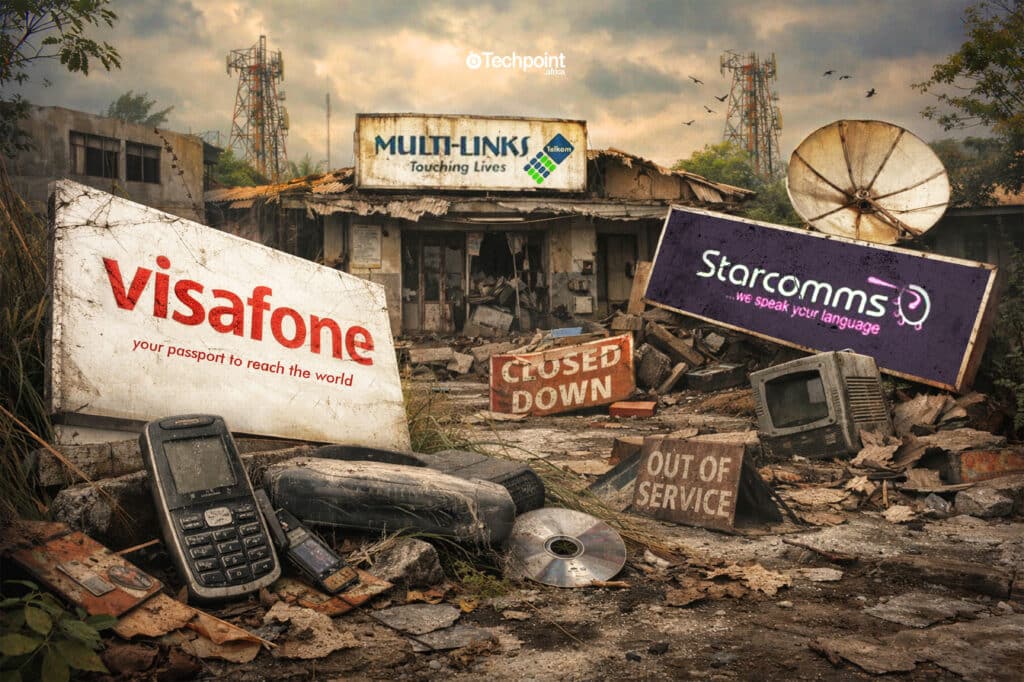
Before MTN, Airtel, and Globacom took over Nigeria’s telecoms scene and became status symbols in the early 2000s, a much quieter telecom revolution was already underway. In the years before the Global System for Mobile Communications (GSM) era formally began in August 2001, a handful of companies were giving ordinary Nigerians access to reliable telephone connections: something that was quite radical at the time.
They were the CDMA operators — Code Division Multiple Access networks built on a technology that many people still argue was superior, in several important aspects, to the GSM alternative that would eventually bury them.
The first movers of mobile technology
Between 1985 and the late 1990s, in Nigeria, if you wanted a personal telephone in your home or office, you needed a fixed telephone line (often referred to as a land line) connected to a socket in the wall, routed through cables to a pole outside, and finally to the Nigerian Telecommunications Limited (NITEL). NITEL, Nigeria’s only telephone company at the time, was largely unreliable due to poor infrastructure maintenance, insufficient investment, congested networks, frequent disconnections, and waiting lists stretching for years. Entire cities outside Lagos and Abuja barely had coverage.
But all of these came to an end in the late 1990s, when the Nigerian Communications Commission (NCC) licensed several Private Telecommunications Companies (PTOs) to improve telecoms services in the country, ending NITEL’s monopoly and introducing Code-Division Multiple Access (CDMA) technology in Nigeria.
This license opened the door for some of Nigeria’s oldest telecoms companies, which provided fixed and mobile telephony services using CDMA technology. Multilinks was the first CDMA network company to receive a license in 1996 and began operations in December 1998, followed by many others, including Intercellular, Starcomms, and Visafone. MTS First Wireless, which had launched Nigeria’s first mobile phone network in 1992, also repositioned itse...