MyndHaven Is Building AI-Powered Tools to Improve Therapy Preparation and Follow-Up
Myndhaven is designed to connect what happens between therapy sessions...
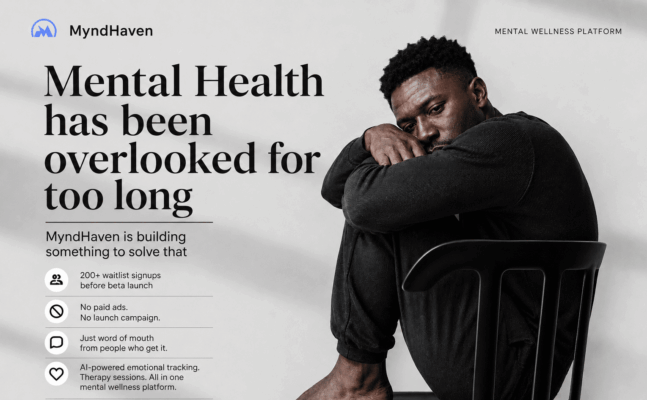
Depression and anxiety alone cost the global economy an estimated $1 trillion every year. In total, poor mental health is projected to cost the world economy $6 trillion annually by 2030. And yet, for most people who go to therapy, the session still starts the same way it always has: their therapist asks how the week went, and they spend twenty minutes trying to remember.
That’s the problem Myndhaven is trying to fix.
The co-founders of MyndHaven, Prince Idoma from Abuja, Nigeria and Julian Mangual from Minnesota, USA, met in a LinkedIn comment section, stayed in each other’s DMs long enough to become friends, and eventually found themselves circling the same question: why does the most important context a therapist needs arrive verbally, unreliably, at the start of a fifty-minute session?
The answer, they concluded, is that nobody had built the infrastructure to move it earlier.
What the MyndHaven platform does
Myndhaven works by sitting between a person’s daily emotional life and their clinical care. Users interact with an AI companion through daily check-ins, mood tracking, and journaling. The system builds a picture of their emotional patterns over time. Before each therapy session, the therapist receives a structured summary of that person’s week: what the AI logged, what patterns appeared, and what shifted. The session starts from context, not from scratch.
Myndhaven’s target is to cut therapy get-to-know-you time by over 90%. The idea is that if a therapist already knows you walked into Monday angry, that your sleep dropped midweek, and that Friday was harder than usual, the session can go somewhere real from the first minute.
After the session ends, both the client and the therapist receive a follow-up summary covering what was discussed and what to work on before the next appointment.
What it means for companies
Workforce mental health is where the trillion-dollar problem becomes a boardroom problem. Nearly 12 billion working days are lost each year globally due to mental health conditio...