Paystack bets on an AI-powered dashboard to drive value for over 300,000 businesses
Paystack has redesigned its merchant dashboard for the first time in a decade, positioning the overhaul around artificial intelligence to help businesses make more informed decisions.
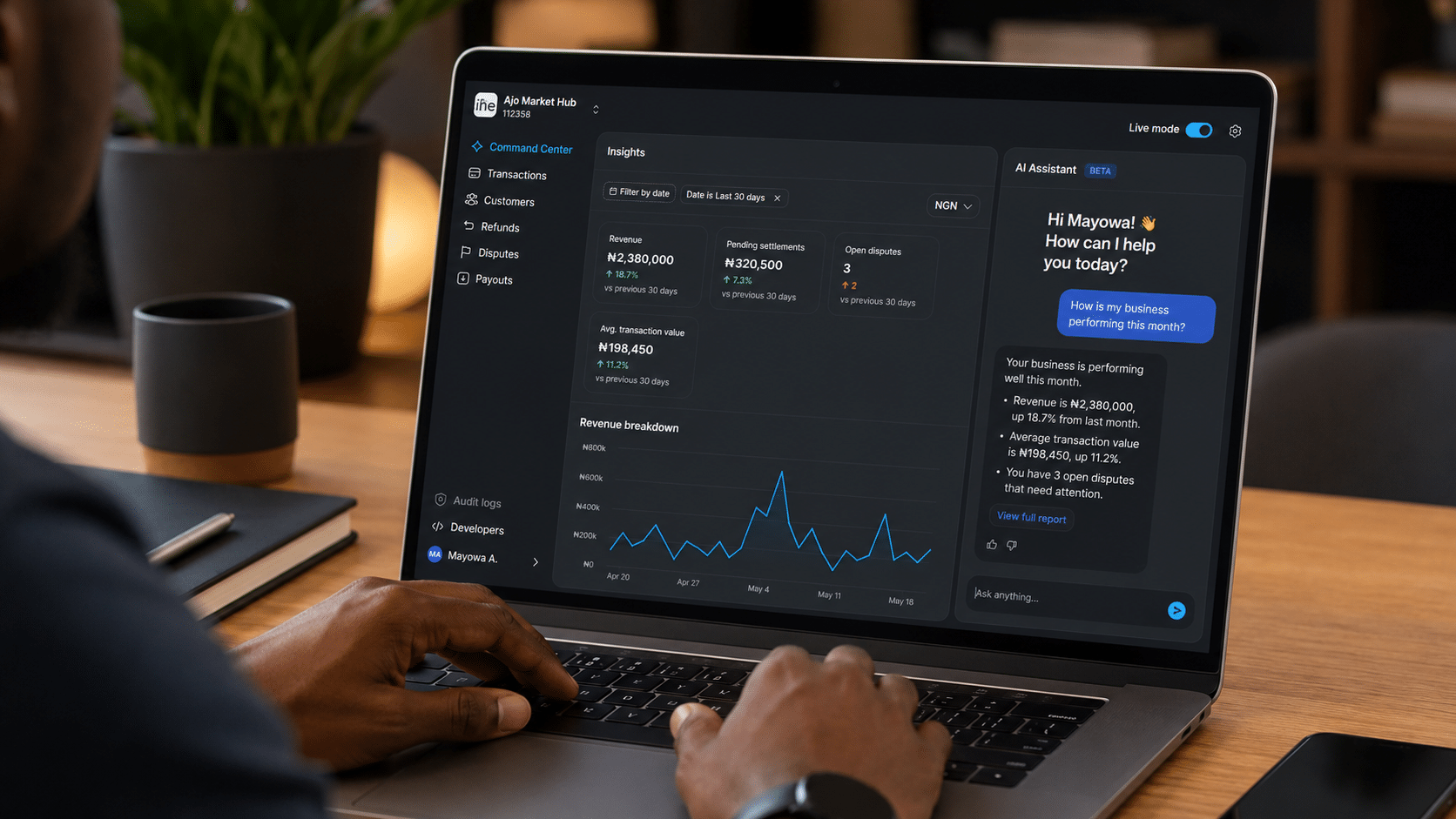
Paystack launched a new AI-powered dashboard today, marking the first major redesign of its merchant dashboard in ten years. More than 300,000 businesses now use Paystack to process trillions of naira monthly across five African countries, including Nigeria, Ghana, and South Africa.
The rebuild comes five months after the fintech announced major changes to its organisational structure with the creation of The Stack Group, a holding company to oversee its expansion beyond financial services.
“We’re not moving away from financial technology. We’re expanding our scope. Emerging technologies could include AI or stablecoins. The mandate is to solve both fintech and non-fintech problems that are critical to Africa’s digital future and development,” COO Amandine Lobelle said about the change.
At the time, the company also disclosed that it had become profitable, a milestone that arrived amid increasing pressure on African startups to demonstrate sustainable growth after years of venture capital-fuelled expansion.
The timing of the dashboard redesign is significant when viewed against the realities of the markets Paystack serves. Across Africa, the vast majority of businesses — often more than 80% in some countries — are small and informal operations whose owners rely heavily on smartphones to run day-to-day operations, from customer communication to inventory management.
Over the years, Paystack’s dashboard has evolved into a more powerful product as the company has introduced additional payment options, analytics tools, settlement features, and integrations. However, that evolution also introduced complexity for merchants, who were often less interested in navigating multiple workflows and more focused on quickly understanding the health of their businesses.
The rebuilt dashboard is designed to simplify that experience. One of its most notable features allows merchants to ask plain-language questions about their payment data and receive responses in tables, charts, or written summaries.
...